
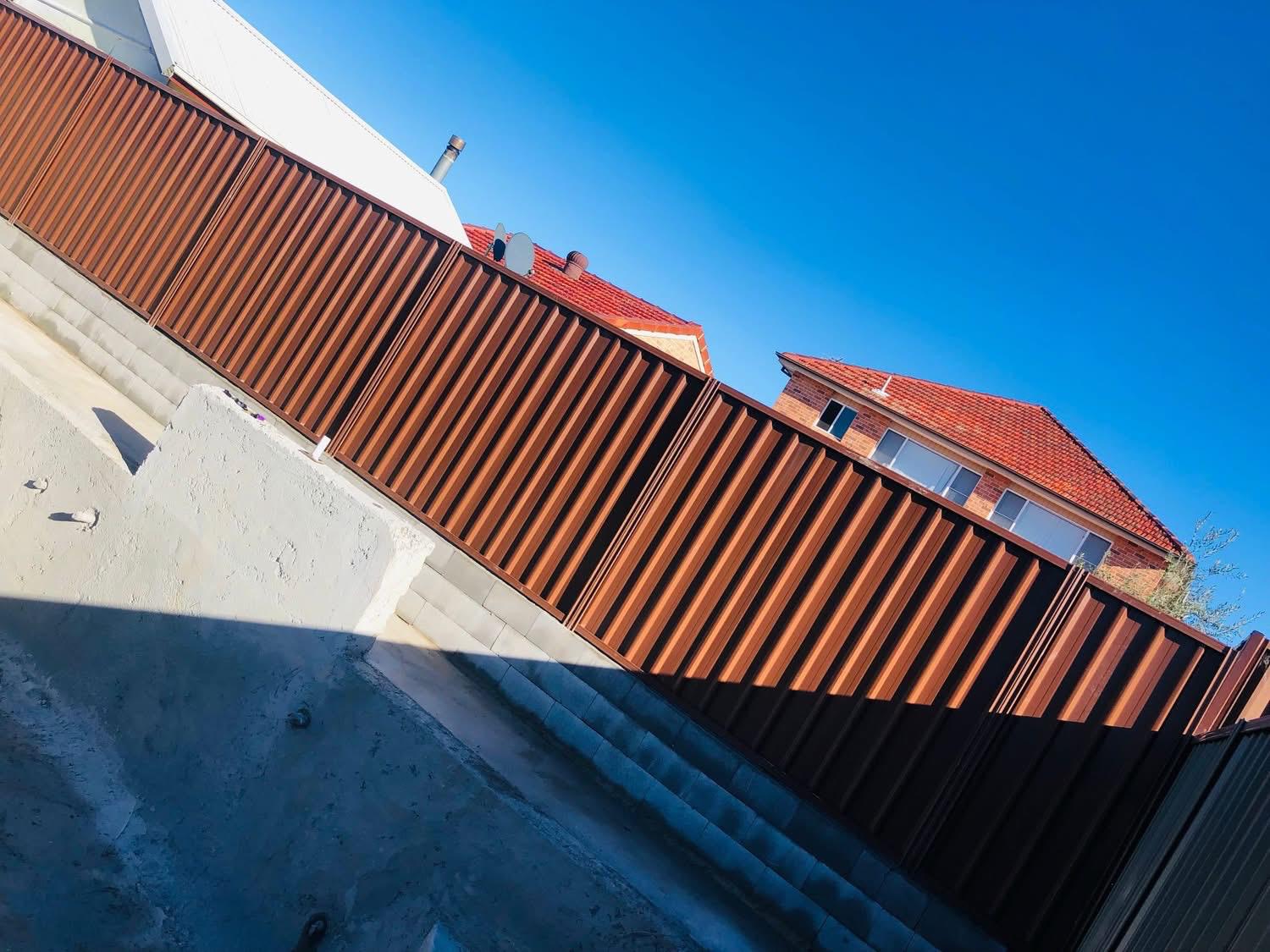
Colorbond Fencing Toongabbie
Colorbond fencing in Toongabbie, planned around creek side drainage, sloping older yards and boundaries that have been patched for years.
Colorbond Fencing in Toongabbie
Toongabbie was largely built out in the 1960s and 1970s and the land is anything but flat. Blocks fall toward Toongabbie Creek and the drainage lines that feed it, and the lower yards can take a lot of water in a heavy summer storm. That has a direct bearing on how a fence should be built here.
A solid steel fence across a natural drainage path acts like a dam, which is the fastest way to end up with a flooded neighbour and a fence pushed out of line. On the low side of a Toongabbie block we keep the base detail open enough for water to pass, or use a plinth with deliberate gaps rather than sealing the run tight to the ground. On the higher parts of the suburb the issues are the usual ones, old rotted paling and a steady fall that needs the panels stepped.
We look at where the water goes before we decide the base detail, then put the whole approach into a fixed written quote. Call 0492 879 796 to book a free measure.
What We Install in Toongabbie
- Drainage friendly base details
- Creek side boundary runs
- Stepped panels on sloping yards
- Rotted paling fence replacement
- Plinths on the higher sections
- Side and rear access gates
- Slat extensions for privacy
- Old post and concrete removal
Colorbond Fencing Options in Toongabbie
Creek Side Boundaries
Fencing on the low Toongabbie blocks with a base that lets stormwater keep moving.
Sloping Yard Steps
Panels stepped evenly where a Toongabbie block falls steadily toward the creek line.
Paling Replacement
Removing rotted 1970s hardwood fencing and rebuilding the run in steel.
Selective Plinths
Plinths used on the higher sections and left open where water needs a path.
Access Gates
Side gates sized for a mower or bin, plus double gates for trailer access.
Footing Removal
Old concrete plugs dug out properly so new posts land where they should.
Colorbond Fencing Service Area Around Toongabbie
Colorbond Fencing Toongabbie FAQs
Will a Colorbond fence cause flooding on my Toongabbie block?
It can if it is built without thought for drainage. A solid sheet run across the natural flow path on a low lying Toongabbie block will hold water back, which floods someone and eventually pushes the fence over. On those boundaries we keep the base detail open enough for water to pass, or use a plinth with deliberate gaps. Where a run crosses a defined overland flow path we discuss it with you before quoting.
Should I still use a plinth on a low block?
Selectively. A plinth is excellent for closing base gaps and stopping mulch washing through, and on the higher parts of a Toongabbie block we use one as a matter of course. On the low corner where stormwater collects, sealing the base tight is the wrong move. It is common for us to plinth two thirds of a run and leave the lowest section open.
How do I get my neighbour to go halves?
Serve a fencing notice. That is the written proposal required under the NSW Dividing Fences Act 1991 setting out the fence you want built, who will build it and the quoted cost. The neighbour then has thirty days to agree or put an alternative. For a standard dividing fence the cost is normally shared equally. If you want extra height or a slat extension purely for your own benefit, expect to pay that part yourself.
What heights and colours are common in Toongabbie?
Most side and rear boundaries here go in at 1.8m, with 2.1m used where a neighbouring house sits higher up the slope and looks into the yard. Woodland Grey and Basalt are the most popular colours because they recede behind established gardens, Monument suits homes that have been rendered and re-roofed, and Jasper works with the original brown brick.
Do you remove the old fence when installing colourbond?
Yes. On Toongabbie blocks the old fence is usually 1970s hardwood paling with posts set in big concrete plugs, often with a shed or a path built against it. We break the footings out rather than cutting posts at ground level, load everything and take it away. Whether you spell it colourbond or Colorbond, removal and disposal is included in the written quote.
Get YourFree Quote Today
Contact Sydney's trusted fencing contractors and landscape designers
Contact Information
Address
77 Garfield St
Wentworthville NSW 2145
ABN
75 644 310 547
Serving All Sydney
Professional since 2016
Why Choose Us?
Free Quotes
No-obligation assessments across Sydney
9+ Years Experience
Established local business
Licensed & Insured
Full compliance and protection
Quality Materials
Premium suppliers and warranties
On-Time Completion
Reliable project delivery
Competitive Pricing
Best value for money
Ready to Get Started?
Contact us today for your free consultation and quote
Professional Fencing & Landscaping Services Sydney
Transform your Sydney property with expert fencing contractors and landscape designers