
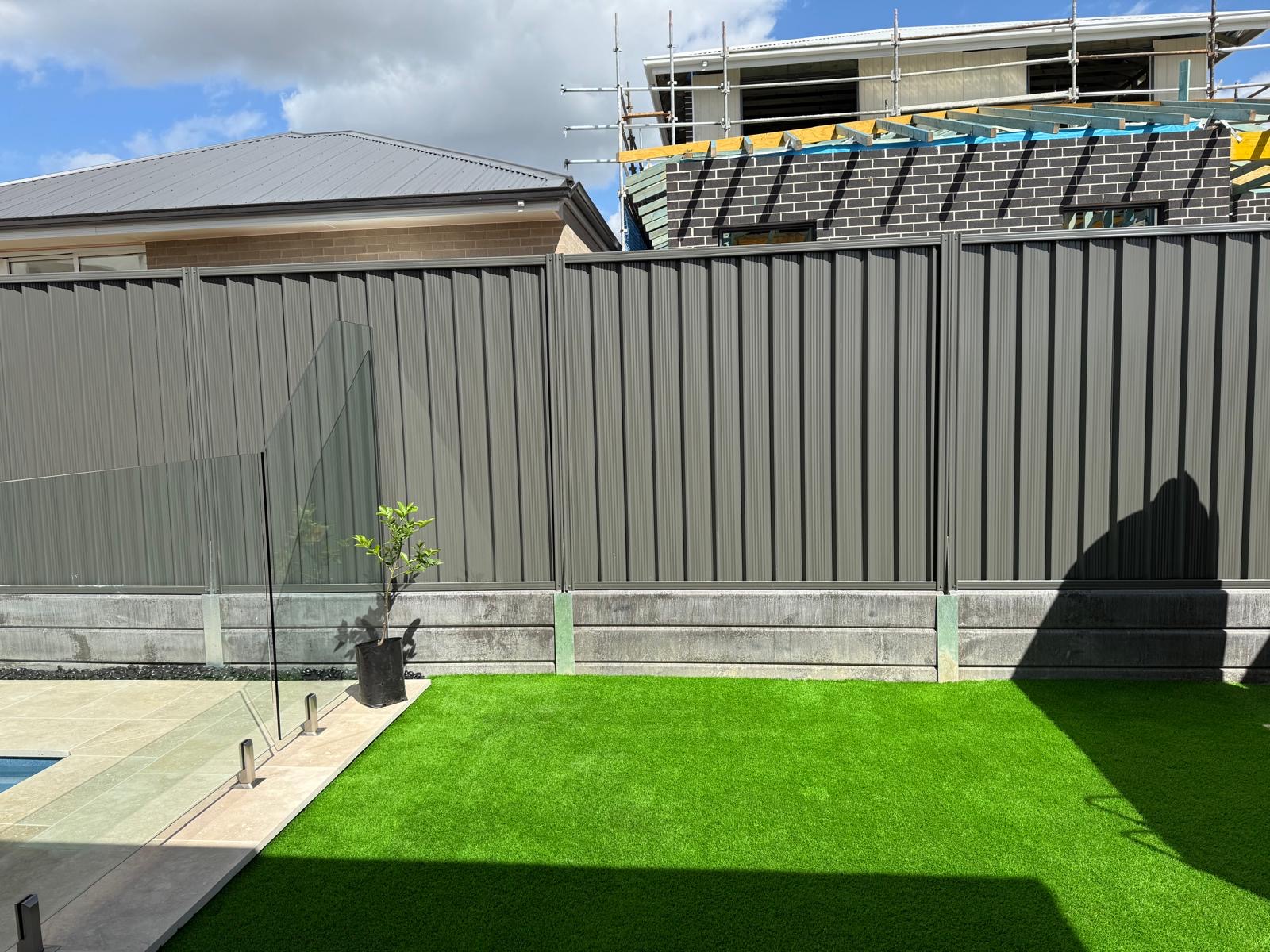
Landscaping Services Penrith
Landscaping in Penrith 2750, from a Wentworthville based team that works this area every week.
What Landscaping Involves in Penrith
The honest starting point for landscaping in Penrith is that you are dealing with ground that can be sand one street and cracking clay the next. Everything we specify follows from working with that rather than pretending it is not there.
There is a pattern to landscaping jobs in Penrith, where the housing is largely a wide spread from Federation cottages to new infill townhouses. A whole street tends to reach the same point at the same time.
Owners in Penrith tend to call us at the point where patching has stopped working. By then the underlying issue is usually level changes that make most of the block unusable, and a repair only postpones it.
Talk to us before you commit to anything. Call 0492 879 796 and we will tell you what your Penrith job actually involves, including the parts nobody enjoys paying for.
Local Conditions That Change the Job
The practical constraint on most Penrith jobs is summer temperatures that are consistently the hottest in the basin. We work the materials route out before quoting, because a barrow run instead of a truck changes the program substantially.
Site conditions here run to flat river terraces with steeper ground toward the escarpment. Levels get set out and recorded before anything is ordered, because a change of grade halfway along a run is a design decision, not something to improvise around.
It is worth knowing about a river corridor that brings both wind and moisture across exposed blocks before you commit to a design. It does not rule anything out, but it changes the detail and it belongs in the quote rather than in a conversation on the day.
Landscaping Options in Penrith
Drainage Works
Surface falls, pits and agricultural lines correcting water that has nowhere to go.
Level Changes
Retaining, steps and terracing that turn a sloping yard into usable outdoor rooms.
Backyard Transformations
Complete rebuilds taking a yard from unusable to finished in one coordinated program.
Lawns
Natural or synthetic turf laid on a base built for the way the lawn will be used.
Paving and Paths
Hard surfaces set out for real circulation rather than filling leftover space.
Staged Programs
Breaking a large scope into stages so the yard is usable between them.
When Landscaping Needs Replacing
Landscaping work in Penrith starts with the ground rather than the catalogue. Blocks here sit on alluvial soils near the river grading to reactive clay on the higher ground, and that single fact shapes footing depth, drainage and how long the finished job stays where you put it.
- Level changes that make most of the block unusable
- A series of small unconnected jobs that never added up to a finished yard
- A garden that has outgrown its original layout
- A yard that holds water for days after rain
What We Specify and Why
Where materials have to cope with older cottages with heritage-style frontages next to modern infill, we upgrade the fixings rather than the visible finish. Fixings are almost always what fails first in this part of the Nepean valley.
The parts you cannot see once the job is finished are the parts worth paying for: footings, drainage, fixings and substructure. That is as true in Penrith as anywhere.
- Soil preparation determines whether a new garden establishes; imported topsoil over unbroken clay simply becomes a bathtub.
- A garden designed around how much time the owner actually has will look better in three years than an ambitious one that does not get attention.
- The most common cause of a failed garden is planting the wrong species for the aspect rather than poor maintenance.
- Irrigation zones separate lawn from beds because their water requirements are entirely different.
- Landscaping is sequenced from the ground up, so drainage and levels are resolved before anything is planted or paved.
Regulation and Compliance in Penrith
Approvals are administered by Penrith City Council, and the controls that matter sit in its development control plan alongside the relevant state provisions. What applies to your street is what counts, not what a neighbour did five years ago.
State provisions set the framework and Penrith City Council applies it locally. Where the two interact, the practical answer is to confirm your specific address rather than rely on a general rule.
From First Measure to Finished Job
We photograph the site before we start and again at completion. On a Penrith job that record settles most questions about what was there and what changed.
Everything is measured on site and photographed, and the quote is written from that rather than from a phone conversation. That is why what arrives on the day is what was priced.
- Lighting and power provision
- Drainage and stormwater correction
- Planting schemes suited to the aspect
- Full backyard transformations
- Retaining and level changes
- Irrigation and mulching
Where Else We Work Near Penrith
More Landscaping and Nearby Areas
Penrith Landscaping Questions Answered
A modest yard is generally a couple of weeks of site time; a yard involving retaining, drainage and structures runs longer and depends on approvals and on the weather. On alluvial soils near the river grading to reactive clay on the higher ground, wet weather stops earthworks completely for a few days afterward, and an honest program allows for that.
Aspect and soil decide it more than fashion does. With alluvial soils near the river grading to reactive clay on the higher ground across the district, species that tolerate seasonal wet and dry do far better than anything needing consistent moisture. We also factor in older cottages with heritage-style frontages next to modern infill, which rules out a number of otherwise popular choices.
Yes, and on larger yards it is usually the sensible approach. We sequence it so the essential ground work, drainage, levels and retaining, happens first, then surfaces, then planting. The yard stays usable between stages and the earlier work is never disturbed by the later work.
With levels and water. Around Penrith, on flat river terraces with steeper ground toward the escarpment and alluvial soils near the river grading to reactive clay on the higher ground, the first questions are where water goes and how the level change is resolved. Everything else, paving, turf, planting and structures, sits on top of those two answers. Getting them wrong is the reason yards get rebuilt twice.
Most soft landscaping does not, but several common elements do. Retaining walls above certain heights, structures, substantial changes to ground levels, tree removal and works in a heritage or bushfire mapped area all attract controls. Penrith City Council publishes the relevant thresholds, and it is worth a check before the excavator arrives.
Get YourFree Quote Today
Contact Sydney's trusted fencing contractors and landscape designers
Contact Information
Address
77 Garfield St
Wentworthville NSW 2145
ABN
75 644 310 547
Serving All Sydney
Professional since 2016
Why Choose Us?
Free Quotes
No-obligation assessments across Sydney
9+ Years Experience
Established local business
Licensed & Insured
Full compliance and protection
Quality Materials
Premium suppliers and warranties
On-Time Completion
Reliable project delivery
Competitive Pricing
Best value for money
Ready to Get Started?
Contact us today for your free consultation and quote
Professional Fencing & Landscaping Services Sydney
Transform your Sydney property with expert fencing contractors and landscape designers