
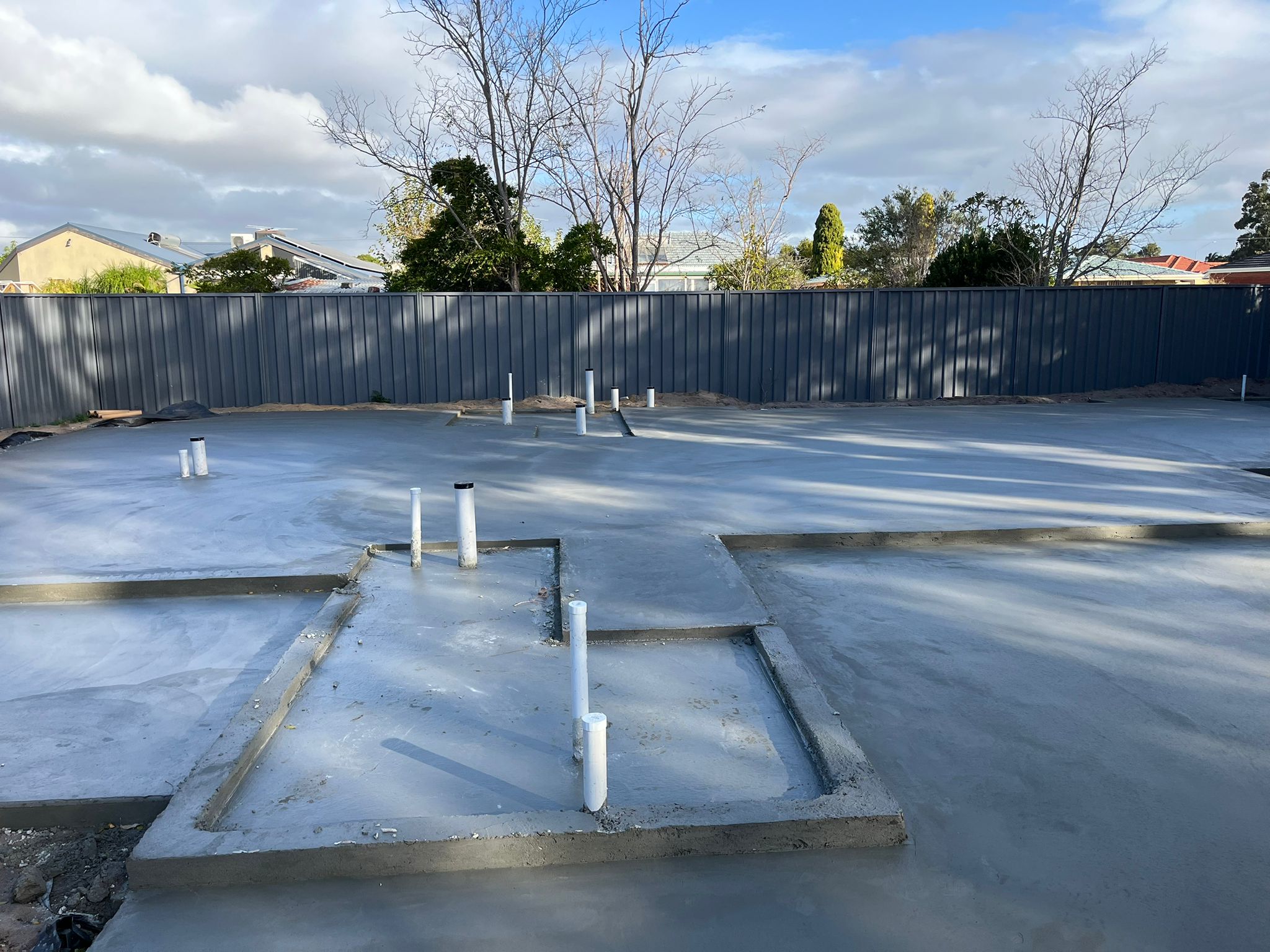
Patio Repair Sydney
Most patio faults are one of five things. We diagnose which, and tell you honestly whether it is worth repairing.
Last updated: 7 August 2026
Last updated 7 August 2026. Written by the team at Fencing and Landscaping Experts, Wentworthville NSW. General information only, current at the date shown. Always confirm the position for your own address with your council or a qualified certifier.
Why is my patio leaking where it meets the house?
Almost always the flashing. Where a patio roof meets a house wall, a flashing has to be let into the wall or dressed under the existing cladding so water is directed onto the roof sheet rather than behind it. A flashing that has been sealed on with silicone rather than installed properly will fail, usually within a few years.
The tell-tale is water appearing inside the house along the same wall, or staining and blistering on the wall under the patio after heavy rain. It rarely leaks in a light shower, because the failure needs volume and wind to drive water back up under the sheet.
Repair means removing the first sheets, cutting or dressing a proper flashing, and re-fixing. It is not a caulking job. Where the wall is brick, the flashing is chased into a mortar course; where it is cladding, it goes under. Either way the sealant is a secondary defence, not the primary one.
What causes a patio beam to sag?
An undersized beam for the span, in the large majority of cases. Patio structures are frequently built to a rule of thumb rather than to a span table, and a beam that was marginal on day one deflects progressively under its own weight and the roof load. Once a beam has taken a permanent set, it does not recover.
The second cause is a post that has settled, which drops one end of the beam and reads visually as a sag in the middle. Checking whether the beam is bowed or the post has dropped is the first diagnostic, and it changes the repair entirely.
The repair is either to reduce the span by adding a post, to replace the beam with a correctly sized member, or to add a supporting beam beneath. Which is right depends on the structure and on what the patio is attached to. We measure before recommending.
- Check whether the beam is bowed or a post has dropped
- Measure the actual span against the section size
- Check the fixing at the house end for movement
- Check the footings under each post
- Decide between adding a post, replacing the beam or sistering it
Rusted posts and corroded fixings
Steel patio posts corrode at the base first, where they meet the slab, because water sits at that junction and the coating is often damaged during construction. Coastal properties through the eastern suburbs, the northern beaches and the Sutherland Shire see it faster, but it happens across the whole basin wherever a post sits in standing water.
The critical question is how much section has been lost. Surface rust on an otherwise sound post is a preparation and coating job. A post that has lost cross section at the base is structural and needs replacement or a properly designed splice, not a coat of paint over it.
Fixings often fail before the members do, particularly where dissimilar metals are in contact. Aluminium in contact with untreated steel corrodes galvanically, and a patio assembled with the wrong screws will loosen long before anything else fails.
Roofing that has lifted, cracked or gone brittle
Roof sheeting fails in three ways: fixings that have loosened and let the sheet lift in wind, polycarbonate that has gone brittle and cracked after years of ultraviolet exposure, and insulated panels with failed joints between them. Each has a different repair, and only the first is usually a straightforward re-fix.
Polycarbonate has a finite service life in Sydney sun and it announces the end of it by yellowing, then by crazing, then by cracking around the fixings. Once it is brittle, walking on it is dangerous and patching it is pointless.
Insulated panel roofing fails at the joints rather than in the field. A leak in the middle of a panel is unusual; a leak along a joint or at a flashing is the norm. That distinction usually decides whether the repair is a section or the whole roof.
Water in the wrong place: gutters, downpipes and falls
A patio roof collects a surprising volume of water and it has to go into the stormwater system. Where a downpipe discharges onto paving or a garden bed, it undermines the base, saturates the ground around the footings and eventually contributes to settlement. Undersized or blocked gutters overflow back against the house wall.
This is the fault most often mistaken for something else. Owners report a leaking patio when the actual problem is a gutter overflowing at one end, or a downpipe that was never connected to anything.
On the reactive clay soils across western and south western Sydney, discharge in the wrong place matters more than it would elsewhere, because saturating clay next to a footing is what causes it to move.
Cracked slabs, sinking pavers and failed footings
If a patio post has dropped, the cause is under it. Common causes are a footing that was too small for the ground, a footing poured onto uncompacted fill, or ground that has been saturated by poor drainage. On reactive clay, seasonal movement alone will lift and drop an inadequate footing until the structure shows it.
Repair means exposing the footing, assessing what is there, and either underpinning, replacing it, or in some cases relocating the post. It is more involved than the visible symptom suggests, which is why we look before quoting rather than after.
Where the base is paving rather than a slab, settlement over a service trench or an inadequately compacted base is the usual explanation. Lifting and relaying with a proper base is a lasting fix; topping up sand is not.
Is it worth repairing, or is replacement the better call?
We give an honest answer to this, and it is not always the one that suits us. If the posts and footings are sound and the fault is roofing, flashing or a single beam, repair is almost always the better value. If the footings have failed, the structure was undersized throughout and the roofing is at the end of its life, repair becomes an expensive way of postponing a rebuild.
The assessment starts at the ground and works up: footings, posts, beams, fixings, roofing, flashing, drainage. That order matters because a new roof on a failing structure is money spent twice.
We repair patios across Sydney, from Penrith and the Macarthur region through to the Sutherland Shire and the northern beaches. Call 0492 879 796 and we will look at it properly and tell you what it actually needs.
Faults We Repair
Related Services and Guides
Patio Repair FAQs
Because the usual failure needs volume and wind to drive water back under the roof sheet or behind a flashing. A light shower does not produce enough of either. That pattern points strongly at the wall flashing or at a gutter overflowing, rather than at a hole in the roof.
Often, yes. The options are reducing the span by adding a post, replacing the beam with a correctly sized member, or adding a supporting beam beneath the existing one. Which is appropriate depends on the structure and the fixings. What does not work is expecting a permanently deflected beam to recover.
Like-for-like repair and maintenance generally does not require approval, but altering the structure, changing its size, or replacing it can. Heritage and bushfire mapping change the answer. If the work goes beyond repair into alteration, confirm the position with your council before starting.
Look at the base where the post meets the slab. Surface rust with the full section intact is a coating problem. Flaking that has eaten into the section, or a post that can be flexed by hand at the base, is structural and needs replacement or a designed repair rather than paint.
Not usefully. Once polycarbonate has crazed and gone brittle it has reached the end of its service life across the whole sheet, not just where it cracked. Patching one area leaves the rest ready to fail, and walking on it to do the patch is unsafe. Replacement of the affected sheets is the sensible course.
Yes. Photograph the damage before anything is moved, because that documentation matters for an insurance claim. We can provide a written scope and quote suitable for an insurer, and we make the structure safe first where anything is at risk of coming down.
Get YourFree Quote Today
Contact Sydney's trusted fencing contractors and landscape designers
Contact Information
Address
77 Garfield St
Wentworthville NSW 2145
ABN
75 644 310 547
Serving All Sydney
Professional since 2016
Why Choose Us?
Free Quotes
No-obligation assessments across Sydney
9+ Years Experience
Established local business
Licensed & Insured
Full compliance and protection
Quality Materials
Premium suppliers and warranties
On-Time Completion
Reliable project delivery
Competitive Pricing
Best value for money
Ready to Get Started?
Contact us today for your free consultation and quote
Professional Fencing & Landscaping Services Sydney
Transform your Sydney property with expert fencing contractors and landscape designers