
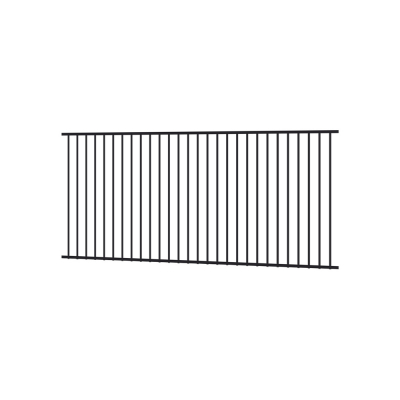
Glass Pool Fencing Sydney
Frameless and semi frameless toughened glass barriers, set out against AS 1926.1-2012 from the first measurement.
Last updated: 7 August 2026
Last updated 7 August 2026. Written by the team at Fencing and Landscaping Experts, Wentworthville NSW. General information only, current at the date shown. Always confirm the position for your own address with your council or a qualified certifier.
What is the difference between frameless and semi frameless glass?
Frameless glass pool fencing uses toughened panels held by spigots set into the ground or the slab, with no posts between panels. Semi frameless uses slim posts between the panels, with the glass clamped or channelled into them. Frameless gives the clearest view of the water and costs more; semi frameless gives most of that openness for a lower outlay.
The practical difference is the fixing. On frameless, every panel is held at two points, so the spigots, the substrate they fix into and the accuracy of the set-out do all the work. That is why frameless is unforgiving of a poorly prepared surface and why it takes longer to install properly.
Semi frameless spreads the load across posts, which makes it more tolerant of an uneven surface and easier to work into a run with steps or changes of direction. On a small Sydney backyard where the pool is the centre of the space, frameless usually earns its cost. Along a long side run behind planting, semi frameless makes more sense.
Is glass pool fencing compliant in NSW?
It is, provided it is designed and installed to AS 1926.1-2012, which is applied through the Swimming Pools Act 1992 and the Swimming Pools Regulation 2018. The standard governs minimum barrier height, the gap under the barrier, the gaps between panels, and the non-climbable zone. Glass has an advantage here because there is nothing on a panel to climb.
That absence of footholds is the main compliance argument for glass. Horizontal rails, wide top capping and anything projecting from the face of a barrier all create problems under the non-climbable zone provisions. A flat panel of glass does not.
Where glass barriers fail is at the gate and at the ground. Gate hardware wears, and the gap between the bottom of a panel and the finished surface can open up as paving settles or as landscaping changes the level. Both are checked at every install and both are worth re-checking yourself each summer.
What fittings should be used on a Sydney pool?
Marine grade stainless steel spigots, hinges and latches, and a rinse as part of ordinary maintenance. Grade matters most within a few kilometres of the coast, through Cronulla, Caringbah and the northern beaches, where airborne salt attacks fittings long before it affects the glass. Inland, the more common issue is fittings that seize rather than corrode.
Marine grade resists corrosion, it is not immune to it. Tea staining, the light brown discolouration that appears on stainless near salt, is a surface effect and it responds to rinsing and occasional cleaning. Neglected, it becomes pitting, and pitting is not cosmetic.
On the shale clay blocks through western Sydney the concern is different. Ground movement shifts spigots and paving, which changes panel alignment and can open a gap under the glass. Core drilling into a properly prepared slab, rather than fixing into a paved surface bedded on sand, is what prevents that.
How is glass pool fencing fixed?
Panels are either core drilled into a concrete slab, bolted to a structural surface, or set into a channel. The substrate determines which. A concrete slab or a properly constructed pool surround takes core drilled spigots. A timber deck needs the framing checked and often upgraded. Paving laid on sand is not a fixing substrate and needs work before glass goes on it.
This is the part of a glass pool fence quote worth asking about, because it is where a cheap install saves money. A spigot bolted to a paver is only as strong as the paver, and the load on a pool barrier fitting is significant.
We check the substrate before quoting, and where it needs work we say so up front. On a new pool we prefer to be involved before the surround is poured, because getting the slab right first is far cheaper than remediating it afterwards.
- Core drilled into a concrete slab or pool surround
- Bolted through to structure on a timber deck
- Channel fixed where the design calls for it
- Substrate assessed before any quote is issued
- Set-out marked and confirmed before drilling
What about gates?
A glass pool gate has to be self-closing from any position it is opened to, self-latching, and hung to swing outwards away from the pool. Hardware is specified for compliance and for the environment, not on price. The gate is the part of any pool barrier most likely to fall out of compliance over time, because it is the only part that moves.
On a glass barrier the hinges carry a heavy panel, so hinge quality is not a detail. Cheap hinges lose tension, and a gate that no longer self-closes from a small opening is non-compliant even though everything else on the barrier is perfect.
Test yours periodically: open it 50mm, let go, and confirm it closes and latches unaided.
Glass pool fencing on sloping and difficult sites
Sydney pools sit on every kind of ground, and glass has to step where the surround does. Each step has to satisfy the barrier height and the gap limit at every point along it, which takes careful set-out. On steep sites through the Hills District, the Sutherland Shire and the harbour suburbs, access for panels is often the harder problem than the fixing.
Toughened glass panels are heavy and awkward, and they cannot be trimmed on site. Everything is measured, ordered and cut to the set-out, which is why the measure has to be right the first time.
Where access is by stair or through the house, we plan the route before ordering. A panel that cannot reach the pool is an expensive mistake.
Repairs, replacements and compliance rectification
We repair and replace glass pool fencing as well as installing it. The common jobs are a cracked or broken panel, corroded or loose spigots, worn gate hardware, and a gap that has opened under the panels where paving has settled. Most of these are rectifiable without rebuilding the run.
A broken toughened panel has to be replaced rather than repaired, and matching an existing panel means measuring the opening precisely and confirming the thickness and the hole positions. We do that before ordering.
If your barrier is due for inspection or the property is going on the market, have the whole barrier assessed rather than just the obvious fault. A compliant panel in a non-compliant barrier does not get you a certificate.
Where We Install Glass Pool Fencing
Glass Pool Fencing FAQs
Pool barrier glass is toughened safety glass, which is designed to fracture into small blunt granules rather than sharp shards. A broken panel has to be replaced rather than repaired, because the toughening is what makes it safe and it cannot be restored. Breakage is uncommon and is usually caused by impact at an edge or corner.
Very little on the glass and more attention on the fittings. Clean the glass as you would a window, and rinse the spigots, hinges and latch when you rinse the glass, particularly near the coast. Test the gate every few months. That is essentially it.
Yes, provided the framing beneath it can carry the load. Pool barrier fittings impose significant force and a standard deck substructure often needs upgrading at the fixing points. We check the framing before quoting, and where it needs work we include it rather than discovering it on the day.
Glass panels have no footholds, which is a genuine advantage under the non-climbable zone provisions of AS 1926.1-2012. That does not remove the requirement to keep the zone clear of other objects: furniture, planters, pumps, taps and anything else within the zone can still fail an otherwise compliant barrier.
Once panels are on hand, a typical domestic run is a short job. The time is in the measure, the set-out, the substrate preparation and the manufacture, because panels are made to the measured openings and cannot be adjusted on site. Where the surround needs work first, that stage governs the program.
We install to AS 1926.1-2012 and prepare the barrier so an inspection is a formality, and we will tell you what else on the site needs attention. The certificate itself is issued by your council or by a registered private certifier following their inspection, not by the installer.
Get YourFree Quote Today
Contact Sydney's trusted fencing contractors and landscape designers
Contact Information
Address
77 Garfield St
Wentworthville NSW 2145
ABN
75 644 310 547
Serving All Sydney
Professional since 2016
Why Choose Us?
Free Quotes
No-obligation assessments across Sydney
9+ Years Experience
Established local business
Licensed & Insured
Full compliance and protection
Quality Materials
Premium suppliers and warranties
On-Time Completion
Reliable project delivery
Competitive Pricing
Best value for money
Ready to Get Started?
Contact us today for your free consultation and quote
Professional Fencing & Landscaping Services Sydney
Transform your Sydney property with expert fencing contractors and landscape designers