
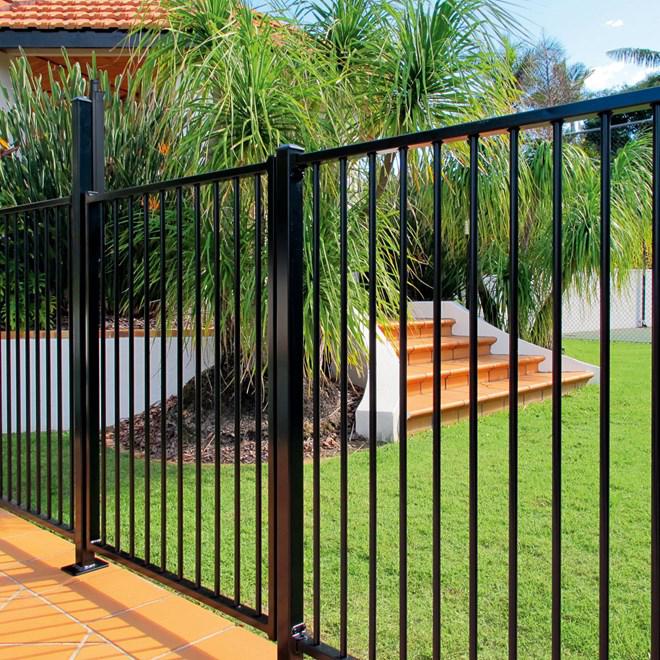
Pool Fence Rules in NSW
What AS 1926.1-2012 actually requires, why barriers fail inspection, and what to check before a certifier attends.
Last updated: 7 August 2026
Last updated 7 August 2026. Written by the team at Fencing and Landscaping Experts, Wentworthville NSW. General information only, current at the date shown. Always confirm the position for your own address with your council or a qualified certifier.
Which rules actually apply to a pool fence in NSW?
Swimming pool barriers in New South Wales are regulated by the Swimming Pools Act 1992 and the Swimming Pools Regulation 2018, and the technical requirements come from Australian Standard AS 1926.1-2012. Your council administers registration and inspection locally. If you own a pool or spa capable of holding water more than 300mm deep, these rules apply to you.
That structure matters because people often go looking for a council rule and find nothing specific. The council is not the source of the technical requirements. It enforces a state Act, and that Act points at an Australian Standard which sets out the measurements. When a certifier assesses your barrier, they are working through AS 1926.1-2012 clause by clause.
Older pools can be assessed against the standard that applied when they were built, and there are separate provisions for very small properties, very large properties and waterfront properties. Because those exceptions turn on dates and land area, do not assume one applies to you. Ask your council or a registered certifier to confirm which version of the standard your pool is judged against before you spend money on rectification.
- Swimming Pools Act 1992 - the head legislation
- Swimming Pools Regulation 2018 - registration, certificates and inspection
- AS 1926.1-2012 - the technical barrier requirements
- Your council - registration, inspection programs and local enforcement
How high does a pool fence have to be?
A pool barrier in NSW must be at least 1.2 metres high, measured from the finished ground level on the outside of the barrier. Where a boundary fence forms part of the pool enclosure, the required height is greater, commonly 1.8 metres measured from the pool side. Height is measured at every point along the barrier, not as an average.
The phrase that catches people out is finished ground level. If a garden bed, a retaining wall, a mound of mulch or a set of steps raises the ground on the outside of the barrier, the effective height at that point drops. A barrier that measured correctly on the day it was built can fall below the requirement years later purely because of landscaping.
The same applies in reverse where ground falls away. On a sloping Sydney block the barrier height has to be checked at the low point and the high point, and a stepped barrier has to satisfy the requirement at each step. This is one of the most common reasons an otherwise well built barrier does not pass.
What is the maximum gap under and through a pool fence?
The gap between the bottom of the barrier and the finished ground level must not exceed 100mm. Gaps between vertical members of the barrier must also not exceed 100mm. Both limits exist for the same reason: a small child must not be able to get through or under the barrier.
Ground movement is what breaks this over time. On reactive clay across western Sydney, and on sandy ground through the shire and the beaches, the level under a barrier changes with the seasons. A gap that was compliant at installation opens up as soil settles, erodes or is washed out by a downpipe discharging nearby.
It is a straightforward thing to check yourself. Walk the full length of the barrier with a 100mm object and try to pass it underneath and between the members at several points. If it goes through anywhere, that section needs attention before an inspection, not after one.
What is the non-climbable zone?
The non-climbable zone is a clear area around the barrier that must not contain anything a young child could use as a foothold. Under AS 1926.1-2012 it is measured as an arc from the top of the barrier, commonly 900mm on the outside and a smaller zone on the pool side. It is the single most common reason a barrier fails inspection.
What counts as a foothold is broader than most owners expect. Pot plants, outdoor furniture, a barbecue, a pool pump housing, an air conditioning condenser, a garden tap, a retaining wall, a tree branch, a rainwater tank and a stack of pavers have all failed barriers. So has a horizontal rail on the outside face of a fence, which is why horizontal slat fencing cannot generally be used as a pool barrier in that orientation.
The zone applies on both sides of the barrier, which becomes awkward when a shared boundary fence forms part of the enclosure. Anything your neighbour stores against their side of that fence can affect your compliance. It is worth having that conversation early rather than during a sale.
Because the exact measurement of the arc and where it is taken from depends on the barrier type and how it is constructed, have a registered certifier confirm the zone for your specific barrier rather than working from a generic diagram.
What are the rules for pool gates?
A pool gate must be self-closing from any position it is opened to, self-latching once closed, and it must open outwards away from the pool area. The latch release must be positioned so a young child cannot reach it, which generally means at least 1.5 metres above ground level or shielded. Gates are the most common point of failure on an otherwise compliant barrier.
Self-closing from any position is a stricter test than it sounds. Many gates close reliably when swung wide but stall when opened only a little, because worn or poorly adjusted hinges do not generate enough force at a small angle. Test yours by opening it 50mm and letting go, then opening it fully and letting go. It has to latch both times without any help.
Gate hardware wears. Spring hinges lose tension, latches corrode, and posts move on reactive ground so the gate no longer meets the latch squarely. A gate that was compliant three years ago is not necessarily compliant today, which is why this is worth testing before you list a property rather than after.
Propping a pool gate open, even briefly while carrying something through, defeats the entire barrier. So does a doormat, a garden hose or a bag of pool salt left in the swing path.
Does my boundary fence count as part of the pool barrier?
If a dividing fence forms part of the enclosure around the pool, it is assessed as a pool barrier rather than as an ordinary fence. That means it must satisfy the height requirement, the gap requirements and the non-climbable zone on the pool side. Many Sydney owners discover this only when a certifier attends.
This matters most on smaller blocks where the pool sits close to the boundary. A standard timber paling fence with gaps between the palings, or a Colorbond fence with a gap under the sheet where the ground has washed out, will not pass simply because it is a boundary fence rather than a pool fence.
The practical options are usually to bring the boundary fence up to barrier standard, or to install a separate compliant barrier inside it so the boundary fence is no longer part of the enclosure. The second option costs more but removes any dependency on the neighbouring property and on what gets stored against the other side.
Do I need to register my pool, and when do I need a certificate?
Swimming pools and spas in NSW must be registered on the NSW Swimming Pool Register. A valid certificate of compliance is generally required when a property with a pool is sold or leased. Registration is free and is done online; the certificate follows an inspection by your council or a registered certifier.
Timing is where this goes wrong. Owners commonly leave the inspection until the property is already on the market, discover a list of rectification items, and then find themselves paying for urgent work under time pressure. Booking the inspection before you list turns the same work into an ordinary job.
Certificates have a limited period of validity, so a certificate obtained some years ago for a previous sale may no longer be current. Confirm the current validity period and your obligations with your council, because these details are set by regulation and can change.
Do I need council approval to install a pool barrier?
Installing or replacing a pool barrier is frequently able to proceed without a full development application, but the pathway depends on your property and the barrier. Pool barriers interact with fence height controls, heritage provisions and bushfire mapping. Confirm the pathway with your council or a private certifier before ordering materials.
The pool itself is a separate question from the barrier. A new pool generally requires either a complying development certificate or a development application, and the barrier requirements attach to it either way. If you are having a pool built, the barrier should be designed at the same time as the shell rather than added afterwards, because the non-climbable zone dictates where pumps, taps, planting and furniture can sit.
We install and rectify barriers across Sydney and we will tell you honestly when a job needs a certifier involved before we start. Getting that order right is far cheaper than rebuilding a barrier that was installed to fit the site rather than to comply.
What a Certifier Looks At
Pool Fence Rules NSW: More Questions
Generally no, not in that orientation. Horizontal members on the outside face of a barrier create a ladder profile, which is exactly what the non-climbable zone provisions of AS 1926.1-2012 exist to prevent. Vertical blade fencing with compliant gaps is the usual alternative and it gives a similar modern appearance. Have a certifier confirm any specific product before you buy it.
You are given the list of items that do not comply and a period to rectify them, after which the barrier is re-inspected. Most failures are hardware, a gap at the base and objects sitting inside the non-climbable zone rather than anything structural. Rectification is usually far cheaper than owners fear, provided the barrier is assessed honestly before work starts.
Any pool or spa capable of holding water more than 300mm deep is generally captured, including many inflatable and portable pools. A spa with a lockable lid that meets the relevant requirements may be treated differently. Because the exceptions are narrow and the consequences are serious, confirm your situation with your council rather than assuming a small pool is outside the rules.
Where a shared boundary fence forms part of the pool enclosure, the requirements apply to that fence, and objects on the far side can affect whether it functions as a barrier. This is a genuine practical difficulty and it is one reason many owners choose to install a separate compliant barrier inside their own boundary instead.
Test the gate every few months, and walk the full barrier at the start of each summer. Check that the gate self-closes and latches from a small opening as well as a wide one, that nothing has been left inside the non-climbable zone, and that no gap has opened under the barrier where the ground has moved. Five minutes twice a year prevents most inspection failures.
Your local council or a registered private certifier accredited to carry out swimming pool inspections. Either can inspect the barrier and issue a certificate if it complies. Your council can also tell you which version of the standard applies to your pool, which depends on when it was built.
Get YourFree Quote Today
Contact Sydney's trusted fencing contractors and landscape designers
Contact Information
Address
77 Garfield St
Wentworthville NSW 2145
ABN
75 644 310 547
Serving All Sydney
Professional since 2016
Why Choose Us?
Free Quotes
No-obligation assessments across Sydney
9+ Years Experience
Established local business
Licensed & Insured
Full compliance and protection
Quality Materials
Premium suppliers and warranties
On-Time Completion
Reliable project delivery
Competitive Pricing
Best value for money
Ready to Get Started?
Contact us today for your free consultation and quote
Professional Fencing & Landscaping Services Sydney
Transform your Sydney property with expert fencing contractors and landscape designers