
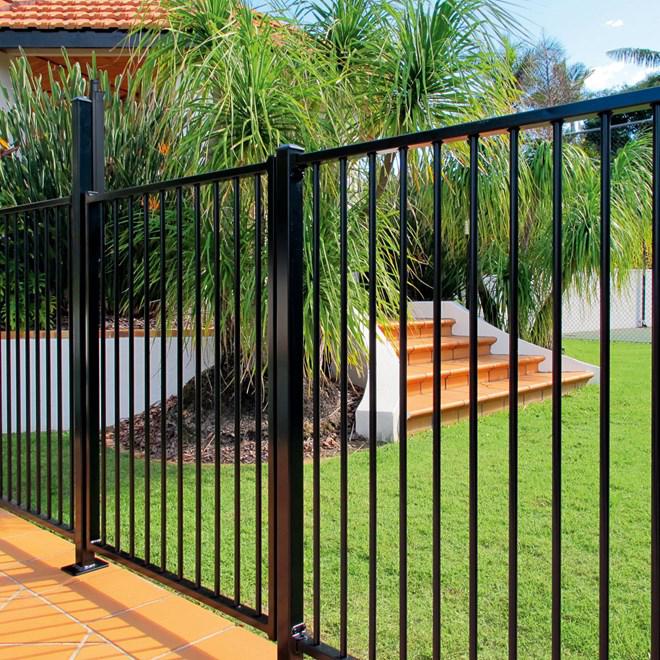
Swimming Pool Fencing Sydney
Barriers designed to comply first and look good second, because a beautiful fence that fails an inspection has cost you twice.
Last updated: 7 August 2026
Last updated 7 August 2026. Written by the team at Fencing and Landscaping Experts, Wentworthville NSW. General information only, current at the date shown. Always confirm the position for your own address with your council or a qualified certifier.
What makes a swimming pool fence compliant in NSW?
A compliant pool barrier satisfies AS 1926.1-2012 on four fronts at once: minimum height measured from finished ground level on the outside, a maximum gap under the barrier, maximum gaps between vertical members, and a clear non-climbable zone. The gate has its own requirements. Failing any single one of these makes the whole barrier non-compliant.
That is the part owners find frustrating. There is no partial credit. A barrier can be the right height, the right material and beautifully installed, and still fail because a pot plant sits inside the non-climbable zone or because the gate no longer latches from a small opening.
It is also why we design a barrier from the compliance requirements outward rather than choosing a look and then trying to make it comply. Every barrier we install is set out with the standard in front of us.
- Minimum barrier height measured from finished ground level
- Maximum gap between the barrier and the ground
- Maximum gap between vertical members
- A clear non-climbable zone on both sides
- A self-closing, self-latching gate opening away from the pool
Which barrier material suits which Sydney site?
Glass suits a pool that is the visual centre of a backyard, because it keeps the sight line to the water open. Aluminium vertical blade fencing is the workhorse: economical, durable and easy to work around planting and level changes. Boundary fence upgrades suit sites where an existing fence already forms part of the enclosure and only needs to be brought up to standard.
Location narrows the choice more than most people expect. Through Cronulla, Caringbah and the northern beaches, salt exposure makes fitting grade the first decision and the aesthetic second. Across the shale clay suburbs of Blacktown, Penrith and the Macarthur region, ground movement is the issue, and footing design matters more than finish.
On steep blocks through the Hills District and the Sutherland Shire, the barrier has to step with the ground and satisfy the requirements at every step. That takes set-out time and it is where a cheap quote usually cuts corners.
Can my existing boundary fence be part of the pool barrier?
It can, and where it is, it stops being an ordinary dividing fence and becomes a pool barrier subject to the full requirements. That means height, gap limits and the non-climbable zone all apply to it, including on the neighbouring side. Many Sydney owners discover this only when a certifier attends.
On smaller blocks where the pool sits close to the boundary this is unavoidable, and the fence has to be upgraded. Common work includes lifting the height, closing gaps at the base, removing horizontal rails from the pool-facing side and dealing with anything within the zone.
The alternative is to install a separate compliant barrier inside your own boundary so the dividing fence is no longer part of the enclosure. It costs more and it removes any dependence on what a neighbour stores against their side of the fence. On rental and investment properties that independence is often worth paying for.
What about the non-climbable zone?
The non-climbable zone is a clear area measured from the top of the barrier that must not contain anything a young child could use as a foothold. It applies on both sides of the barrier and it is the most common reason a pool barrier fails inspection in Sydney. Pot plants, furniture, pumps, taps, retaining walls and tree branches all count.
Design the zone before you build, not after. On a new pool, the positions of pumps, filtration, taps, garden beds and furniture should be decided alongside the barrier, because relocating a pump housing after the surround is finished is expensive and moving a retaining wall is worse.
On an existing pool, clearing the zone is usually the cheapest part of a rectification. It is also the part most likely to creep back, because a garden grows and outdoor furniture moves.
Gates, hardware and the things that wear out
A pool gate must be self-closing from any position it is opened to, self-latching, and hung to swing away from the pool. Because it is the only moving part of a barrier, it is where compliance is lost first. Spring hinges lose tension, latches corrode, and gate posts move on reactive ground until the latch no longer engages squarely.
Test yours the way a certifier will: open it 50mm, let go, and confirm it closes and latches unaided. Then repeat from fully open. A gate that only latches when it is swung hard is relying on momentum and does not comply.
Coastal properties see hardware fail faster because salt attacks springs and pins. Rinsing the hardware along with the fence extends its life significantly.
New pools, existing pools and compliance rectification
We work on all three. On a new pool we prefer to be involved before the surround is poured, so the barrier line, the equipment positions and the non-climbable zone are resolved on paper. On an existing pool we assess the whole barrier and give you the list of what actually fails, so you can decide with the facts in front of you.
Rectification is usually far cheaper than owners fear. The majority of the barriers we assess need hardware, a base gap closed and the zone cleared rather than a rebuild.
The exception is a barrier that was installed to fit the site rather than to comply, which happens more often than it should. Where that is the case we say so plainly rather than patching it and leaving you to fail an inspection.
Registration, certificates and timing
Swimming pools in NSW must be registered on the NSW Swimming Pool Register, and a valid certificate of compliance is generally required when a property with a pool is sold or leased. Certificates are issued by your council or a registered private certifier following an inspection. Book the assessment before you list, not during the campaign.
The pattern we see repeatedly is an owner listing a property, getting an inspection, and then needing rectification work done inside a settlement timeframe. The same work booked two months earlier is ordinary maintenance.
Call 0492 879 796 and we will assess the barrier and tell you exactly where it stands.
Barrier Types We Install
Swimming Pool Fencing FAQs
A pool barrier in NSW must meet the minimum height set by AS 1926.1-2012, measured from the finished ground level on the outside of the barrier, and a boundary fence forming part of the enclosure has a higher requirement. Because ground levels change with landscaping, height should be checked along the whole barrier rather than at one point. Your council or a registered certifier can confirm the figures for your pool.
There is nothing stopping an owner doing the work, but the barrier still has to satisfy AS 1926.1-2012 in full, and the consequences of getting it wrong are serious. The mistakes we are most often called to fix are gate hardware, gaps at the base where the ground was not levelled, and a design that ignores the non-climbable zone.
Aluminium vertical blade fencing is generally the most economical compliant barrier, and on many Sydney sites upgrading an existing boundary fence is cheaper still. Which is genuinely cheaper depends on your site: the ground, the levels, and what is already there. We assess both options and quote them side by side.
Not necessarily. Gate hardware wears, gaps open under barriers as ground settles, landscaping changes the effective height, and gardens grow into the non-climbable zone. A barrier that passed some years ago should be re-checked, particularly before a sale or lease.
Yes. Strata and community title pools have the same barrier requirements, with the added step that the owners corporation rather than an individual owner instructs the work. We are happy to deal with a strata manager and to provide a scope and quote suitable for a committee to consider.
Most hardware and gap rectification is a short job once we have the parts. The lead time is usually in the assessment and, where panels are involved, in manufacture. If you are working to a settlement date, tell us at the first call so we can be realistic about it.
Get YourFree Quote Today
Contact Sydney's trusted fencing contractors and landscape designers
Contact Information
Address
77 Garfield St
Wentworthville NSW 2145
ABN
75 644 310 547
Serving All Sydney
Professional since 2016
Why Choose Us?
Free Quotes
No-obligation assessments across Sydney
9+ Years Experience
Established local business
Licensed & Insured
Full compliance and protection
Quality Materials
Premium suppliers and warranties
On-Time Completion
Reliable project delivery
Competitive Pricing
Best value for money
Ready to Get Started?
Contact us today for your free consultation and quote
Professional Fencing & Landscaping Services Sydney
Transform your Sydney property with expert fencing contractors and landscape designers