
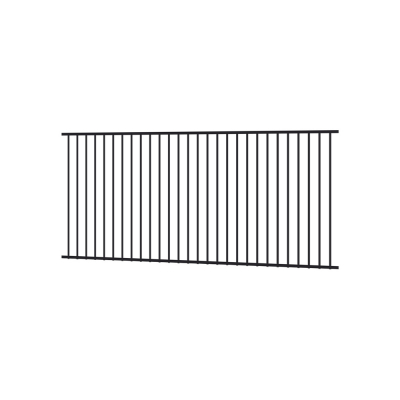
Pool Gate Compliance Checklist for NSW
The gate is the part of a pool barrier that fails most often. These are the checks you can do yourself in five minutes.
Last updated: 7 August 2026
Last updated 7 August 2026. Written by the team at Fencing and Landscaping Experts, Wentworthville NSW. General information only, current at the date shown. Always confirm the position for your own address with your council or a qualified certifier.
What does a pool gate have to do in NSW?
Under AS 1926.1-2012, applied through the Swimming Pools Act 1992 and the Swimming Pools Regulation 2018, a pool gate must be self-closing from any position it is opened to, self-latching once closed, and must open outwards away from the pool area. The latch must be positioned so that a young child cannot reach and operate it. All four requirements have to be met at the same time.
The reason gates attract so much attention is simple: the gate is the only moving part of a barrier. Fence panels do not wear out in three years. Spring hinges lose tension, latches corrode, and posts move on reactive ground so the gate stops meeting the latch squarely.
That is why a barrier that passed an inspection some years ago is not automatically compliant today, and why the gate is the first thing any certifier tests.
How do I test whether my gate is self-closing?
Open the gate about 50mm, let go, and watch. Then open it fully, let go, and watch again. It must swing closed and latch on its own, without any push, from both positions. Most gates that fail do so on the small opening, because worn hinges do not generate enough force at a narrow angle.
Do the test with the gate in its normal state, not after you have cleaned or adjusted anything. If it needs a nudge, it does not comply. If it closes but does not latch, it does not comply. If it latches only when swung hard, it does not comply.
Repeat the test from both a slow release and a normal release. A gate that only latches when it is thrown is relying on momentum, which is not what the requirement asks for.
- Open 50mm, release, confirm it closes and latches
- Open fully, release, confirm it closes and latches
- Confirm it latches without being pushed
- Repeat after any adjustment or hardware change
Which way does a pool gate have to swing?
Outwards, away from the pool area. A gate that swings inwards towards the pool can be pushed open by a child leaning on it, which defeats the purpose of a self-latching gate. This is a design requirement, so a gate hung the wrong way is not something that can be fixed by adjustment alone.
This catches out gates that were rehung during landscaping work, or gates that were installed by someone treating the pool gate as an ordinary garden gate. It is worth checking even if nothing appears to have changed.
It also affects where the latch and the hardware sit, so a gate reversed for compliance usually needs new hardware rather than the old hardware moved across.
How high does the latch have to be?
The latch release must be positioned so that a small child cannot reach it. In practice this generally means a release at least 1.5 metres above ground level, or a lower release that is shielded so it cannot be reached through or over the barrier. The exact arrangement depends on the latch type and the barrier construction.
Because there is more than one compliant arrangement, and because the shielding requirements are specific, this is a point worth confirming with a registered certifier rather than eyeballing. A latch that is nearly high enough is not compliant, and it is a cheap thing to fix.
Whatever the arrangement, the release must not be operable by reaching through the barrier, over the top of it, or under it.
What about gaps around the gate?
The same gap limits that apply to the barrier apply to the gate. The gap under the gate must not exceed 100mm from finished ground level, and gaps between vertical members must not exceed 100mm. The hinge side is where this is most often missed, because the clearance needed for the gate to swing can create a gap wide enough to fail.
Ground under a gate wears, particularly on a path where people walk through repeatedly. A gate that was set correctly can develop a gap simply because the surface beneath it has worn or subsided.
Check the gap at the closed position and along the full width, not just in the middle.
What fails a pool gate at inspection most often?
In order: hinges that no longer close the gate from a small opening, latches that have corroded or seized, gaps under the gate where the ground has worn away, objects stored inside the non-climbable zone near the gate, and gates propped open with a doormat, a hose or a bag of pool chemicals. Four of the five cost very little to fix.
Coastal properties through the northern beaches and the Sutherland Shire see hardware failures faster than inland ones, because salt attacks springs, pins and latch mechanisms. Rinsing the hardware when you rinse the fence extends its life noticeably.
Inland, on the reactive clays through western and south western Sydney, the more common problem is post movement. The gate post shifts seasonally, the gate stops meeting the latch, and the owner starts pushing it closed out of habit without registering that it has stopped self-latching.
- Worn spring hinges that fail the small-opening test
- Corroded or seized latch mechanism
- Gap opened under the gate as ground wore away
- Objects stored inside the non-climbable zone
- Gate propped open by a mat, hose or container
- Gate hung to swing inwards toward the pool
- Gate post moved so the latch no longer engages squarely
When should I get the gate checked professionally?
Before you list a property for sale or lease, before a scheduled council inspection, and any time the gate has started needing a push. Booking an assessment early turns a list of small hardware items into ordinary maintenance instead of urgent work under time pressure during a sale.
We repair and replace pool gate hardware and rectify barriers across Sydney, and we will tell you honestly whether the gate needs hardware, an adjustment or replacement. Where a certifier needs to be involved, we say so.
Call 0492 879 796 and we will assess the whole barrier rather than just the gate, because a compliant gate on a non-compliant barrier does not get you a certificate.
The Five Minute Self Check
Pool Gate Questions
Yes. A compliant pool gate closes and latches on its own from any position it is opened to, including a small opening. If it needs any assistance, it does not comply. The usual cause is worn spring hinges, which is one of the cheapest items on a barrier to put right.
No. A pool gate must be self-closing and self-latching at all times, and propping it open, even while the pool is in use, defeats the barrier. This includes indirect propping by a doormat, a garden hose, a pot or a container left in the swing path.
It must be positioned so a young child cannot reach and operate it, which in practice generally means a release at least 1.5 metres above ground level, or a lower release that is shielded to prevent access. Because there is more than one compliant arrangement, confirm the specific requirement for your gate with a registered certifier.
Yes. A pool gate must open outwards, away from the pool area. A gate hung to swing inward can be pushed open, which defeats the self-latching requirement. Correcting this generally means rehanging the gate and replacing the hardware rather than simply moving the latch.
There is no fixed interval, but spring hinges and latches are wearing parts. On coastal sites they degrade noticeably faster because of salt. The practical rule is to test the gate every few months and replace hardware as soon as it stops passing the small-opening test rather than waiting for an inspection to tell you.
In most cases, yes. The majority of the pool barriers we assess need hardware, an adjustment and a gap closed rather than a rebuild. We assess the full barrier first, because there is no point having a compliant gate in a barrier that will fail elsewhere.
Get YourFree Quote Today
Contact Sydney's trusted fencing contractors and landscape designers
Contact Information
Address
77 Garfield St
Wentworthville NSW 2145
ABN
75 644 310 547
Serving All Sydney
Professional since 2016
Why Choose Us?
Free Quotes
No-obligation assessments across Sydney
9+ Years Experience
Established local business
Licensed & Insured
Full compliance and protection
Quality Materials
Premium suppliers and warranties
On-Time Completion
Reliable project delivery
Competitive Pricing
Best value for money
Ready to Get Started?
Contact us today for your free consultation and quote
Professional Fencing & Landscaping Services Sydney
Transform your Sydney property with expert fencing contractors and landscape designers